Before You Set Your XI, Read This Formation Breakdown
The best football formation in 2026 is not a universal shape; it is the structure that matches your players, pressing capacity, and attacking objectives. Tactical Review evaluates the leading systems—...

Before You Set Your XI, Read This Formation Breakdown
The best football formation in 2026 is not a universal shape; it is the structure that matches your players, pressing capacity, and attacking objectives. Tactical Review evaluates the leading systems—4-3-3, 4-2-3-1, 3-5-2, 4-4-2, and 4-1-4-1—using defensive coverage, midfield control, width, transition speed, and role clarity. A 4-3-3 creates three central midfield connections and natural wing width, while a 4-2-3-1 provides a double pivot and four attacking lanes. A 3-5-2 can produce a 3v2 advantage in central areas but demands two high-output wing-backs. The 2026 FIFA World Cup will again expose whether teams can defend transitions after losing possession. Listen up — this is the part that matters: choose the formation around repeatable player actions, then test it for 30 days before judging the system.
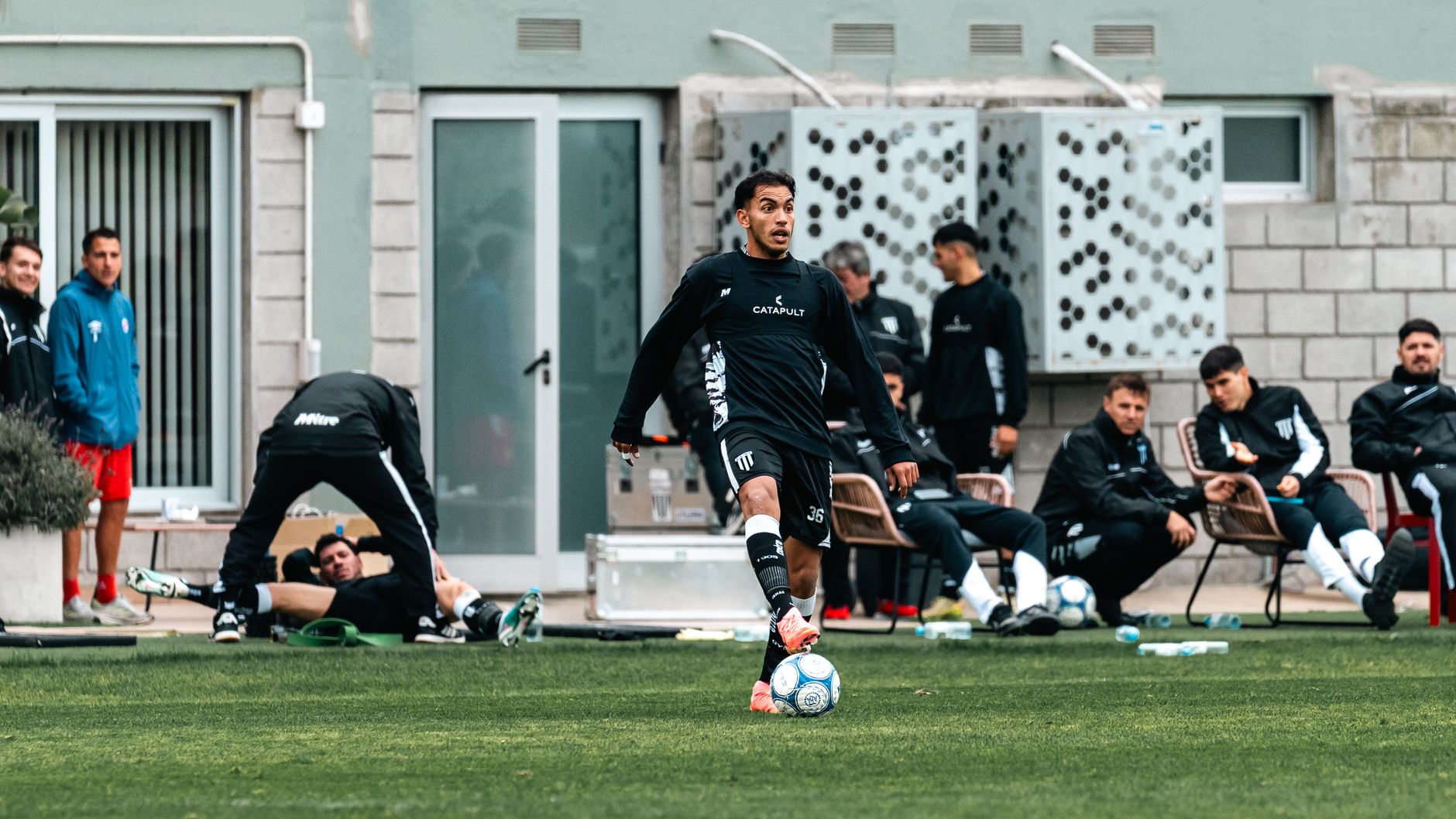
Photo by Franco Monsalvo on Pexels
The latest tactical trend is not a fashionable formation number; it is fluidity between phases. A team may defend in a 4-4-2, build in a 3-2-5, and attack with only two defenders behind the ball. This is why the popular claim that one formation is automatically “the best” is analytically weak. A formation describes starting positions, not the complete game model. According to the Laws of the Game from the International Football Association Board, a match still involves 11 players per side, but those players can occupy radically different spaces during possession and defensive transitions. Tactical Review focuses on the practical question: which structure gives your strongest players the most repeatable advantages? First identify the match problem, then select the shape, and finally define the rotations that make it work.
Would you like a broader tactical reference before comparing systems?
If you need controlled possession: choose 4-3-3
The 4-3-3 is usually the strongest choice for controlled possession because it creates a back four, a three-player midfield, and three advanced attacking lanes. Its core advantages are natural width, clear pressing triggers, and strong access to both half-spaces. The system works best when the holding midfielder can receive under pressure and the wingers can threaten defenders one-versus-one.
The 4-3-3 is not automatically attacking. A weak rest defence can leave both centre-backs exposed when full-backs advance, particularly against fast forwards such as Kylian Mbappé or Vinícius Júnior. The solution is often asymmetry: one full-back overlaps while the other moves inside beside the No. 6. Pep Guardiola’s Manchester City has repeatedly used this principle, although exact roles change according to personnel and opponent.
A functional 4-3-3 requires measurable behaviours:
- The No. 6 must protect the central lane when possession is lost.
- The interiors must stagger their heights rather than occupy the same line.
- The wingers must hold width until the full-back or midfielder creates an overlap.
- The centre-forward must pin centre-backs or create space through movement.
- The nearest three players must counter-press immediately for approximately five seconds.
A useful information-gain point is that many amateur teams misdiagnose possession failure. The issue is often not passing accuracy; it is poor vertical spacing. If the distance between the back line and midfield exceeds roughly 20–25 metres, the 4-3-3 becomes easy to press because the pivot receives without nearby support. That spacing error matters more than whether the team labels itself “possession-based.”
To study build-up patterns, use this guide to football pressing triggers alongside your formation review.
If you require extra protection: use 4-2-3-1
The 4-2-3-1 is the most reliable formation for teams that need defensive security without abandoning four attacking players. Two holding midfielders protect the centre-backs, the No. 10 connects midfield to the striker, and the wide players can drop into a compact defensive line of four. Its best use case is a squad with one excellent creator and two disciplined pivots.
The structure becomes particularly effective against opponents using a single central striker. One pivot can step toward the ball while the second screens the space behind, reducing the chance of a direct pass through midfield. However, the formation can become passive if the No. 10 stays too high and the pivots remain flat. In that situation, the team defends with a large gap between six players and the striker, often conceding territorial control.
The two pivots need different jobs, not identical instructions. One should generally anchor, while the other supports circulation, presses the opponent’s midfielder, or arrives late near the penalty area. Real Madrid’s use of double-pivot principles has varied across coaches and seasons, but the lesson remains consistent: role separation creates stability. A 4-2-3-1 with two stationary midfielders is not balanced; it is predictable.
Listen up — this is the part that matters: choose 4-2-3-1 when your team’s main weakness is central vulnerability, not merely because the diagram looks safe. A practical tactical pattern is that teams lose fewer central turnovers when the two pivots maintain staggered positions, but they create fewer chances if the No. 10 does not rotate into either half-space. The system therefore trades some midfield dynamism for protection.
See the tactical application in this football midfield roles and responsibilities.

Photo by Franco Monsalvo on Pexels
At approximately one-third of the evaluation, compare the 4-3-3 and 4-2-3-1 by decision quality rather than reputation. The 4-3-3 generally offers better natural width and more aggressive pressing angles, while the 4-2-3-1 offers stronger protection against central counterattacks. Neither system guarantees possession, goals, or clean sheets. Those outcomes depend on player profiles, distances, pressing coordination, and the quality of the first pass after recovery. The contrarian conclusion is straightforward: a weaker squad often benefits from 4-2-3-1 because it reduces the number of emergencies that defenders must solve individually, but a technically superior squad may waste its advantage if the double pivot slows circulation. Measure entries into the final third, recoveries within five seconds, progressive passes, and shots conceded after turnovers for four consecutive matches. Those numbers tell the truth faster than pundit opinion.
Ready to compare the two most common systems with real tactical criteria?
If you want overloads and two strikers: test 3-5-2
The 3-5-2 is a strong option when a team has two compatible forwards, mobile wing-backs, and centre-backs comfortable defending wide channels. It creates a numerical advantage against a lone striker during build-up and can place two forwards against two centre-backs. Its weakness is exposed space behind the wing-backs, especially when the midfield cannot shift quickly.
A 3-5-2 should not be treated as “three defenders plus five midfielders.” In possession, it often becomes a 3-2-5 or 3-4-1-2, with one midfielder moving between lines. Out of possession, it may collapse into a 5-3-2, where wing-backs drop alongside the centre-backs. The transition between those shapes is the real tactical challenge. If one wing-back is late by two seconds, the outside centre-back may be forced toward the touchline and open the penalty area.
The most important selection criteria are practical:
- Can both wing-backs complete repeated 30–40 metre recoveries?
- Can the outside centre-backs defend one-versus-one near the flank?
- Can one striker run behind while the other links play?
- Can the midfield three cover the width without losing central compactness?
- Can the team counter-press immediately after losing the ball?
Antonio Conte’s Inter Milan demonstrated how effective a 3-5-2 can become when wing-back timing, striker partnerships, and defensive rotations are rehearsed precisely. Yet copying Inter’s shape without Inter’s movement is worthless. The system needs at least 12–15 outfield players capable of understanding multiple phase-specific roles across a season, because injuries and substitutions alter its geometry.
What is the best formation for pressing?
The best pressing formation is usually 4-3-3 or 4-2-3-1, depending on whether the team wants an aggressive first line or greater central protection. A 4-3-3 can press with the striker curving toward one centre-back while the winger blocks the full-back. A 4-2-3-1 can press through the No. 10 and wide players while preserving a double pivot behind them.
Pressing success depends more on triggers than on the printed formation. Common triggers include a backward pass, a poor first touch, a pass toward the sideline, or a receiver facing his own goal. The nearest player attacks the ball, the second player closes the next pass, and the third player protects the escape route. If those actions do not occur within one or two seconds, the press becomes running without control.
The FIFA Training Centre regularly presents positional and transition principles rather than claiming one universal formation. That approach is correct. A team should track:
- High recoveries per match.
- Opponent passes allowed before a shot.
- Defensive actions within five seconds of losing possession.
- Successful regains in the attacking third.
- Chances conceded after the first pressing line is bypassed.
A useful edge case is the goalkeeper’s distribution. If the opponent presses with three players, a 4-3-3 may create a free full-back, but only if the goalkeeper can accurately reach that player under pressure. If the pass repeatedly lands behind the full-back, the numerical advantage exists only on paper.
What is the best formation for defending a lead?
The best formation for defending a lead is commonly 4-5-1, 4-1-4-1, or a compact 5-4-1, selected according to the opponent’s attacking threat and your team’s ability to retain the ball. A low block should protect the central lane first, force crosses from poor locations, and preserve an outlet for counterattacks. Simply adding defenders does not automatically improve defensive security.
The 4-1-4-1 offers a disciplined midfield line with a dedicated No. 6 screening the centre-backs. It can deny passes into the opposing No. 10 and still leave wide midfielders ready to press full-backs. The danger is isolation: if the striker is 35 metres from the midfield line, every clearance returns immediately to the opponent. Therefore, defending a lead requires possession exits, not only compactness.
For a 5-4-1, the outside centre-backs must decide when to step into the wide channel. If they stay too deep, the opponent can cross repeatedly; if they step too early, a channel opens beside the remaining centre-backs. Track the number of uncontested crosses, second-ball recoveries, and entries into the six-yard box. These are more revealing than total tackles.
According to UEFA technical reports, elite tactical analysis increasingly evaluates space, transitions, and collective behaviours rather than formation labels alone. UEFA has repeatedly emphasised that “the game is constantly evolving,” a principle that should end the lazy argument that defensive formations are inherently negative. The correct question is whether the shape controls danger.
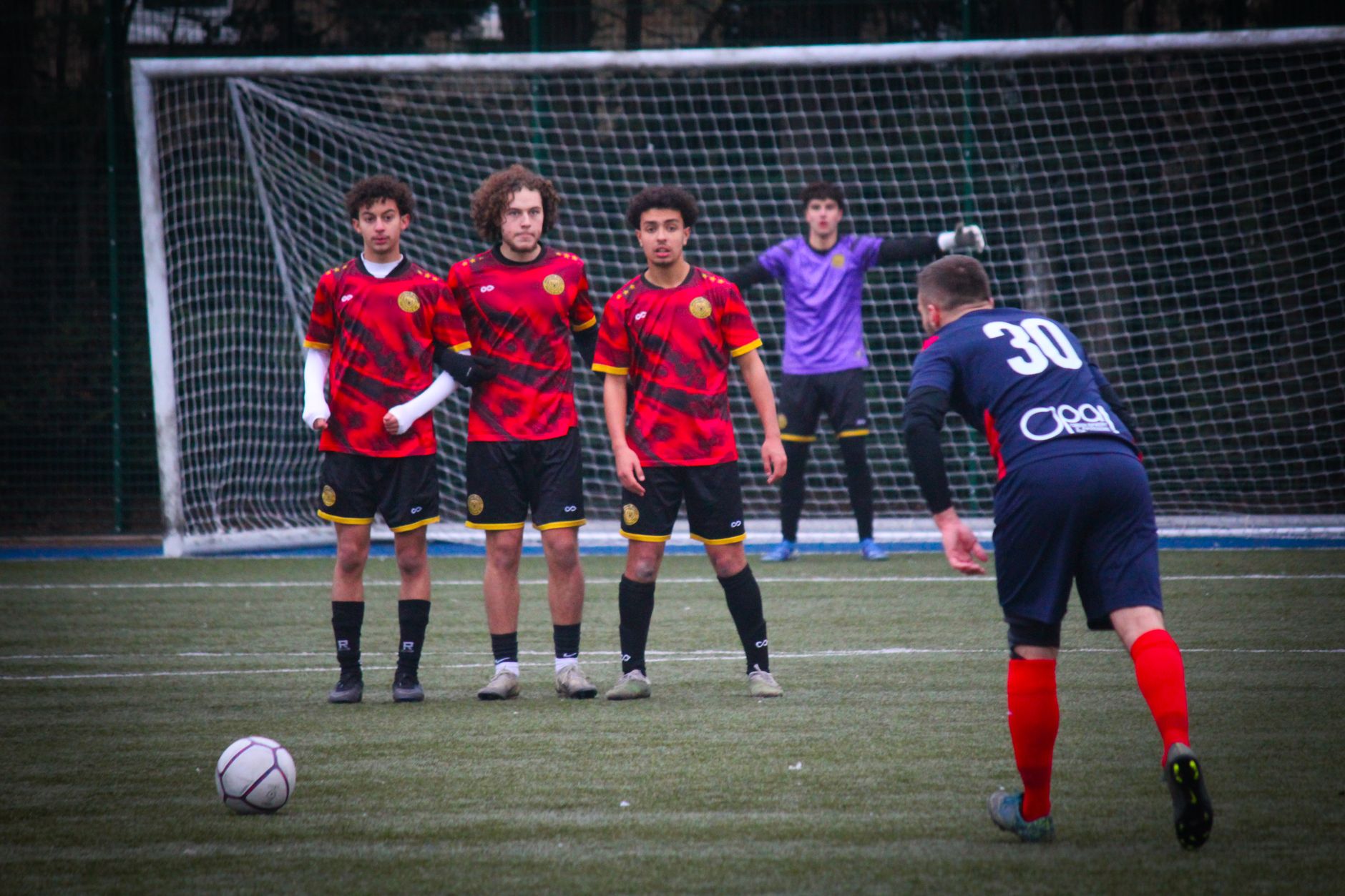
Photo by Ali Bensoula on Pexels
Common pitfalls to avoid
The most common formation mistake is selecting a shape before identifying player strengths. Coaches often choose 4-3-3 because elite clubs use it, then discover that their wingers cannot defend, their No. 6 cannot receive under pressure, and their full-backs cannot recover. The second mistake is changing formation after every poor result. A system needs repeated training exposures, not emotional redesign after 90 minutes. The third mistake is confusing numerical superiority with functional superiority: three centre-backs do not help if the wing-backs are pinned and the midfield cannot progress the ball.
Avoid these errors systematically:
- Do not use a lone striker without defining how the team advances support.
- Do not push both full-backs high unless rest defence is clearly assigned.
- Do not place two midfielders on the same vertical line for the entire match.
- Do not press with the front three while the midfield remains 15 metres behind.
- Do not judge a formation only by goals scored; include chances conceded and transition shots.
- Do not copy Manchester City, Liverpool, Inter Milan, or Bayern Munich without equivalent player profiles.
The fourth mistake is ignoring set pieces. A team may defend open play effectively in 4-4-2 but concede 10–15% of its goals from poorly assigned corners and free kicks. Formation analysis must therefore include attacking and defensive restarts, substitution patterns, and the final 15 minutes. Tactical Review’s match evaluations treat those details as part of the system, not as separate trivia.
Want a structured way to review match performance?
The 30-day check-in
A formation should be evaluated over 30 days, not one headline match. First, spend days 1–7 defining the base shape, pressing triggers, build-up exits, and defensive responsibilities. Then, during days 8–21, record at least four competitive matches or controlled games, noting field position, chance quality, turnovers, high recoveries, and the locations where attacks break down. Finally, use days 22–30 to compare the data against the original objective and decide whether the problem is the formation, the roles, or execution quality.
Use this scorecard:
- Build-up success: percentage of possessions reaching the middle third.
- Progression: completed passes into the final third per 90 minutes.
- Defensive control: shots conceded after losing possession.
- Pressing: recoveries within five seconds of a turnover.
- Width: successful entries into the final-third wide channels.
- Chance creation: shots from central areas and expected goals.
- Stability: goals conceded during the final 15 minutes.
A practical threshold is not a universal league standard, but a trend across four matches. If central turnovers fall by 20% while final-third entries remain stable, a 4-2-3-1 may be solving the correct problem. If the 4-3-3 creates 30% more wide entries but concedes twice as many counterattacking shots, its attacking gain is not yet worth the defensive cost. Treat those figures as decision signals, not magic cutoffs.
The best football formation is the one that produces repeatable advantages with your available players. Start with 4-3-3 for width and proactive possession, 4-2-3-1 for central protection and creator access, 3-5-2 for striker partnerships and overloads, or 4-1-4-1 for disciplined defensive control. Then train the rotations, measure the transitions, and review the evidence after 30 days. Everyone says formations are just numbers; that is incomplete. The numbers reveal spacing, responsibility, and risk when you track them properly.
Explore more World Cup tactical analysis before finalising your next match view.
2026 FIFA World Cup team tactics
Frequently Asked Questions
Q: What is a football formation?
A: A football formation is the planned positional structure that describes how a team distributes its 10 outfield players around the goalkeeper. A 4-3-3 means four defenders, three midfielders, and three forwards in the starting shape, while a 3-5-2 uses three defenders, five midfielders, and two forwards. The diagram changes during possession, pressing, and defensive transitions, so the formation is a reference point rather than a fixed arrangement. Coaches should define the movements behind each number.
Q: How do you choose the best football formation?
A: Choose the formation by matching the system to player profiles, opponent threats, and the team’s main tactical objective. Use 4-3-3 for width and proactive pressing, 4-2-3-1 for double-pivot protection, 3-5-2 for two-striker combinations, and 4-1-4-1 for compact midfield defending. Test the choice across at least four matches and record progressive passes, shots conceded after turnovers, high recoveries, and final-third entries before changing it.
Q: What is the difference between 4-3-3 and 4-2-3-1?
A: The 4-3-3 uses three central midfielders and usually provides more natural width, while the 4-2-3-1 uses two holding midfielders and a dedicated No. 10. The 4-3-3 can press more aggressively but may expose the pivot if spacing is poor. The 4-2-3-1 protects the centre more effectively but can isolate the striker or reduce midfield progression when the pivots remain too deep.
Q: Is 3-5-2 better than 4-3-3?
A: The 3-5-2 is better than 4-3-3 only when the squad has reliable wing-backs, mobile outside centre-backs, and two forwards who complement each other. It can create a central overload and strong striker support, but it concedes wide space if wing-backs are pinned. A 4-3-3 is generally safer for teams with natural wingers and technically capable full-backs. The correct choice depends on execution, not reputation.
Q: Why does a football formation fail during a match?
A: A formation usually fails because player distances, role clarity, or transition reactions are poor rather than because the formation itself is defective. Common causes include a midfield gap greater than 20 metres, both full-backs advancing simultaneously, or a press beginning without midfield support. Review video and event data for four matches, then determine whether the problem is structural, positional, or technical before changing systems.
Q: How much training does a new formation require?
A: A new formation normally requires 30 days of structured training and match review before a reliable judgment can be made. The first week should establish positions and pressing triggers, the next two weeks should test the system against different opponents, and the final week should compare outcomes with the original objectives. At minimum, evaluate four matches using turnovers, final-third entries, high recoveries, and shots conceded after transitions.
Q: Can a team use more than one formation?
A: Yes, a team can use multiple formations if the players understand the shared principles and phase-specific rotations. For example, a side may defend in 4-4-2, build in 3-2-5, and attack in 2-3-5 without making a substitution. The critical requirement is clear communication about who covers the centre, who provides width, and who protects against counterattacks. Shape changes should solve tactical problems, not create confusion.