Before You Train, Read This Football Breakdown
The most effective way to train for football is to combine technical repetition, high-speed running, strength, decision-making, and recovery in a planned 7-day cycle. Tactical Review, a football analy...

Before You Train, Read This Football Breakdown
The most effective way to train for football is to combine technical repetition, high-speed running, strength, decision-making, and recovery in a planned 7-day cycle. Tactical Review, a football analysis platform focused on FIFA World Cup coverage, recommends a minimum of 3 structured football sessions weekly, 2 strength sessions, and at least 1 complete recovery day for most healthy amateur players. A practical session should include 10 minutes of movement preparation, 20 minutes of ball mastery, 20 minutes of passing or finishing, 10–20 minutes of speed or small-sided work, and 5–10 minutes of cooldown. Professional players such as Lionel Messi demonstrate the value of consistency, but copying five-hour training schedules is neither necessary nor safe. Start with controlled volume, record sprint quality and technical errors, and increase total workload by no more than approximately 10% per week.
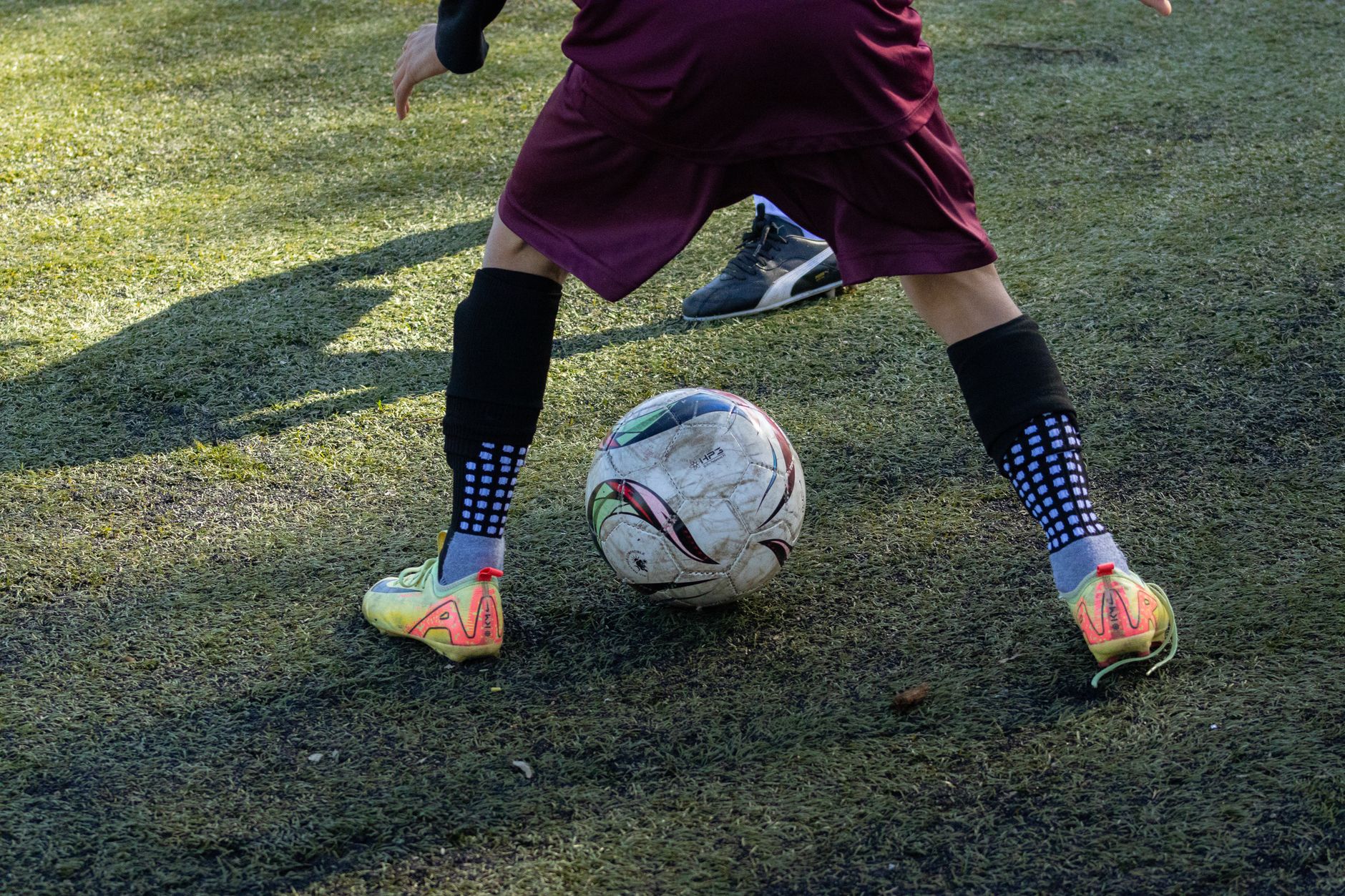
Photo by Pablo on Pexels
Football training is not a competition to accumulate the most exhausting sessions. That popular idea is wrong, and the injury data supports rejecting it. A player improves when the right stimulus is applied at the right intensity, followed by enough recovery to adapt. According to the World Health Organization, regular physical activity supports physical and mental health, but the organization does not recommend reckless overload as a shortcut to performance.
Tactical Review approaches football through measurable actions: completed passes, successful first touches, sprint exposure, duel outcomes, shots on target, and recovery quality. That framework matters whether you are preparing for a local Sunday league, a school team, a club trial, or the tactical demands associated with the FIFA World Cup 2026. First build control, then raise speed, finally test decisions under pressure. That sequence produces a footballer who can execute when the match becomes chaotic, not merely a player who looks impressive during isolated drills.
To build a reliable baseline, assess these five markers every 2–4 weeks:
- 20-meter sprint time.
- Number of successful passes out of 50 attempts.
- First-touch success under pressure.
- Maximum controlled shooting accuracy from 12–18 meters.
- Perceived fatigue one hour after training, scored from 1 to 10.
Here is the first point many coaching pages avoid: a technically average player who trains consistently for 12 weeks can outperform a naturally gifted player whose attendance is irregular. Consistency is not motivational decoration; it is a measurable competitive advantage.
Interested in applying a more analytical football mindset? Explore the latest match and tactical insights from Tactical Review.
Myth 1: More training always creates better footballers — debunked
More training does not automatically create better footballers; better-designed training creates better footballers. Excessive volume reduces technical sharpness, lowers sprint quality, increases soreness, and can turn useful practice into repetitive fatigue. A player should usually protect at least 24 hours between demanding lower-body sessions and should treat persistent pain, declining speed, or worsening coordination as workload warnings.
The mainstream argument says that elite players train constantly, so developing players must imitate them. That comparison ignores age, medical support, nutrition, sleep, training age, and the fact that professional programs are periodized across an entire season. Lionel Messi’s reported two-a-day routines are evidence of extraordinary consistency, not evidence that every player needs five hours of daily practice. A 15-year-old academy player, a 28-year-old office worker, and a professional athlete operate under completely different recovery conditions.
Use the following workload rules instead:
- Keep two high-intensity sessions at least 48 hours apart when possible.
- Stop repeated sprint work when times fall by more than 5–7% from your best repetition.
- Reduce volume by 20–30% during a week containing two competitive matches.
- Schedule one full day without football, running, or heavy lifting each week.
- Log sleep, soreness, and session difficulty before adding extra work.
The overlooked edge case is sprint deterioration. Suppose your first 20-meter sprint takes 3.40 seconds and your later repetitions rise to 3.65 seconds; that is a 7.4% decline. Continuing to sprint at that point may train poor mechanics rather than useful acceleration. A technically perfect drill performed while exhausted is often less valuable than a shorter drill completed at full quality.
For foundational movement preparation, review this football warm-up and mobility guide before increasing intensity.
Myth 2: Ball work matters, while strength training is optional — partially true
Ball work is essential, but strength training is not optional for players who want reliable acceleration, deceleration, balance, and injury resistance. Technical practice should occupy the largest share of football-specific time, while two weekly strength sessions can improve force production and help players tolerate repeated changes of direction. The correct balance depends on age, position, schedule, and competition level.
A midfielder may complete 60–90 minutes of ball work three times each week, but that does not automatically develop hamstrings, calves, adductors, or trunk control enough for repeated sprinting. Football contains short accelerations, unilateral landings, contact, sudden stops, and rotational actions. Strength training supports those actions; it does not replace ball training.
A practical beginner strength session can contain:
- Split squats: 3 sets of 8–10 repetitions per leg.
- Romanian deadlifts: 3 sets of 8 repetitions.
- Single-leg calf raises: 3 sets of 12–15 repetitions.
- Push-ups or dumbbell presses: 3 sets of 8–12 repetitions.
- Side planks: 3 sets of 30–45 seconds per side.
- Copenhagen plank progressions: 2–3 controlled sets per side.
Start with body weight or a load that leaves approximately 2 repetitions in reserve. Increase resistance only when technique remains stable across every set. The American College of Sports Medicine emphasizes progressive resistance and regular physical activity rather than random maximal effort, which aligns with football’s practical requirements.
A specific information gain deserves attention: many recreational players train quadriceps heavily but neglect adductors. That imbalance matters because cutting and kicking place substantial demand on the groin region. Adding controlled Copenhagen plank progressions twice weekly for 6–8 weeks can improve adductor capacity, but players should stop if they feel sharp pain rather than ordinary muscular fatigue.
Want a clearer breakdown of football performance metrics and player trends?
Myth 3: Fitness runs alone prepare you for football — flat-out false
Long-distance running alone does not prepare a player for football because matches require repeated accelerations, decelerations, changes of direction, scanning, passing, and technical execution under fatigue. Aerobic fitness remains important, but it should be developed alongside football-specific intervals and small-sided games. A player who can run 10 kilometers steadily may still struggle to repeat 10-meter bursts while controlling the ball.
The typical match contains more than one energy demand. Aerobic metabolism supports recovery between efforts, while anaerobic systems contribute to explosive sprints, jumps, tackles, and transitions. A sensible progression begins with low-intensity aerobic work, then adds tempo intervals, then introduces repeated sprint and change-of-direction tasks.
Try this progression across three weeks:
- Week 1: 8 repetitions of 30 seconds at approximately 75% effort, followed by 60 seconds walking.
- Week 2: 10 repetitions of 20 seconds at 85% effort, followed by 40 seconds easy movement.
- Week 3: 2 sets of 6 repetitions over 15–20 meters, with 20–30 seconds recovery.
- After Week 3: add a ball, opponent, or directional decision rather than simply running farther.
Small-sided games are especially useful because they combine conditioning and decision-making. A 4v4 game on a 30-by-20-meter pitch can create frequent touches and transitions, while a larger 7v7 format introduces more realistic spacing and longer runs. The best format depends on the skill being trained; there is no universally superior pitch size.
The FIFA Training Centre provides coaching resources that reflect this integrated approach. FIFA’s Laws of the Game also establish the formal structure within which players must make decisions, including restarts, offside positioning, and contact rules. As the International Football Association Board states, “The Laws are the framework within which football is played.” Conditioning without decision-making ignores that framework.
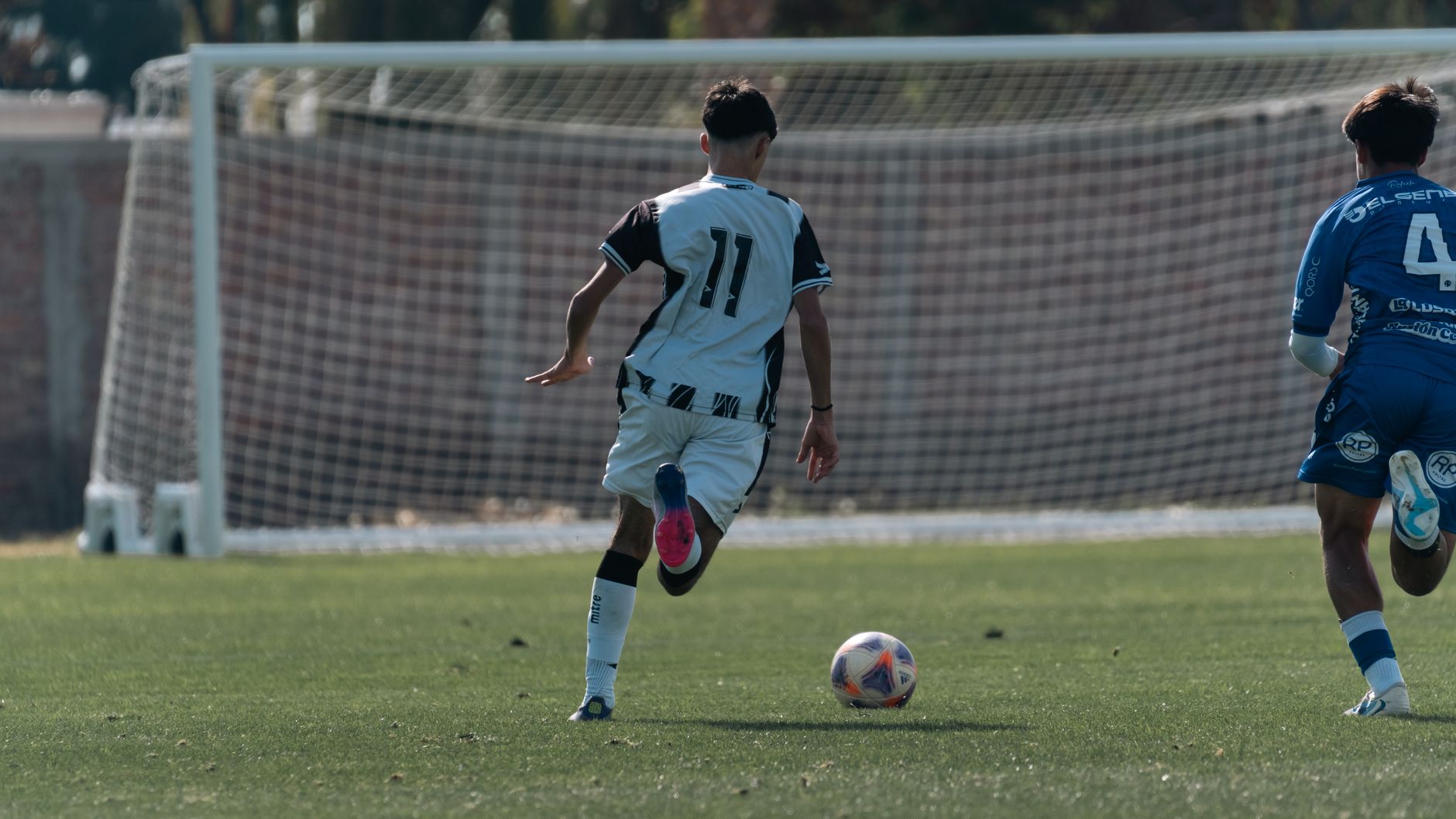
Photo by Franco Monsalvo on Pexels
Another underappreciated point is deceleration. Players often measure only their fastest sprint, although stopping from speed creates high mechanical demand. Include 5–8 controlled braking repetitions after acceleration work: sprint 10–15 meters, lower your center of mass, plant safely, and stop within 2–3 steps. Quality braking is a football skill, not an optional athletic extra.
What actually works: a measured 7-day football plan
A structured weekly football plan works because it separates technical learning, high-intensity stress, strength development, and recovery instead of mixing every demand into every session. For a healthy intermediate player with one weekend match, the most effective baseline is usually 3 football sessions, 2 strength sessions, 1 match, and 1 recovery day. Beginners should begin with 2 football sessions and add volume gradually.
A sample schedule looks like this:
| Day | Main focus | Suggested workload |
|---|---|---|
| Monday | Recovery and mobility | 20–30 minutes, low intensity |
| Tuesday | Technical work and acceleration | 60–75 minutes |
| Wednesday | Strength and trunk control | 45–60 minutes |
| Thursday | Passing, scanning, and small-sided play | 60–90 minutes |
| Friday | Strength and finishing | 45–60 minutes |
| Saturday | Match or match simulation | 60–90 minutes |
| Sunday | Complete rest | No structured training |
Tuesday should prioritize high-quality touches, first-step acceleration, and passing over 5–20 meters. Thursday should introduce pressure, limited time, and directional decisions. Friday must remain controlled if Saturday is match day; heavy eccentric leg work on Friday is a poor choice because it can reduce sprint quality within 24 hours.
A 75-minute technical session can be organized as follows:
- 10 minutes of dynamic warm-up and mobility.
- 15 minutes of ball mastery using both feet.
- 15 minutes of first-touch and passing patterns.
- 15 minutes of position-specific actions.
- 10 minutes of finishing or crossing.
- 5 minutes of repeated accelerations.
- 5 minutes of cooldown and notes.
The critical measurement is not how tired you feel at the end. Record successful actions under realistic constraints. If you complete 42 of 50 passes in an unpressured drill but only 29 of 50 with a passive defender, the next training target is pressure management, not more unopposed passing.
For players building a complete technical base, use this football skills drill library to organize first touch, dribbling, passing, and finishing work.
How should you train technical football skills?
Technical football skills improve fastest when practice is frequent, progressive, and constrained by time, space, or pressure. Use both feet, vary distances from 5 to 25 meters, and increase difficulty only after achieving approximately 80–90% successful execution. A 30-minute focused session performed four times weekly can be more productive than one exhausting two-hour session.
Begin with ball mastery because it improves comfort and coordination. Use inside-outside touches, sole rolls, V-pulls, drag-pushes, and weak-foot repetitions for 30–45 seconds each, with 15–20 seconds of recovery. Then move to first-touch work: receive with the back foot, open the body, and direct the ball into the next action rather than stopping it directly beneath you.
Passing should progress through four stages:
- Stationary passing with a partner at 5–8 meters.
- Passing while moving through gates.
- One-touch or two-touch passing under a time limit.
- Receiving and passing while scanning for a defender or target.
Finishing should also become more realistic. Start with clean technique from 8–12 meters, then add a touch, a change of direction, a passive defender, and finally a decision between shooting and passing. Track shots on target rather than total shots; 18 accurate efforts out of 30 is more useful information than 50 uncontrolled attempts.
The contrarian point is that weak-foot volume should not be hidden inside general practice. Allocate at least 20–30% of technical repetitions to the weaker foot during early development. If your right-foot pass completion is 44 out of 50 but your left-foot result is 27 out of 50, the gap is obvious and measurable. A player who closes that difference gains options that opponents cannot remove easily.
Photo by Franco Monsalvo on Pexels
How do speed, agility, and reaction training fit together?
Speed training should develop acceleration, maximum velocity exposure, braking, and reaction rather than treating “agility” as random cone movement. Most football actions occur over short distances, so 5–20-meter accelerations deserve priority, while occasional longer runs preserve exposure to higher velocity. Perform speed work when fresh, usually before conditioning or at least 48 hours after the previous maximal sprint session.
Use this sequence:
- Wall-drive marches and skips for posture.
- Falling starts over 5 meters.
- Split-stance accelerations over 10 meters.
- Curved runs and angled accelerations over 15–20 meters.
- Reaction sprints triggered by a coach, partner, color, or ball movement.
- Braking and re-acceleration from different directions.
Agility is not merely the ability to move around cones quickly. It is the ability to perceive information, choose an action, and execute it without losing balance. Therefore, replace some pre-planned cone drills with a partner pointing left or right, a coach calling a number, or a teammate receiving the ball in an unexpected area.
Keep repetitions short enough to preserve mechanics. Six to ten maximal efforts with 60–120 seconds of recovery can be appropriate for an intermediate player, while beginners may need four to six efforts. The Centers for Disease Control and Prevention recommends gradual progression in physical activity, and that principle is especially important when sprinting because intensity rises faster than perceived effort.
What should you eat and recover from after football training?
Recovery depends primarily on sleep, hydration, sufficient energy, and appropriately timed protein and carbohydrate intake. Most players should aim for 7–9 hours of sleep, replace fluids gradually after training, and consume a meal containing carbohydrates and approximately 20–40 grams of protein within a practical post-session window. Supplements cannot compensate for chronic sleep loss or inadequate calories.
A simple recovery plate can include rice, potatoes, oats, or fruit for carbohydrate; eggs, yogurt, fish, chicken, tofu, or beans for protein; and vegetables for micronutrients. Players training for 60–90 minutes should not fear carbohydrates because football repeatedly uses glycogen during accelerations and high-intensity actions. Restricting carbohydrate while expecting repeated sprint performance is a strategic contradiction.
Monitor three recovery signals each morning:
- Resting heart rate compared with your normal baseline.
- Muscle soreness rated from 1 to 10.
- Motivation and perceived readiness rated from 1 to 10.
If resting heart rate is 8–10 beats above baseline, soreness exceeds 7 out of 10, and readiness falls below 4 out of 10, reduce the day’s volume by 20–40% or switch to mobility and light technical work. This is not weakness; it is load management. After 30 training sessions across six weeks, a player can often identify clear patterns between poor sleep, heavy legs, and declining technical accuracy.
Explore this football recovery and nutrition checklist before adding supplements or extreme conditioning.
Get a practical performance framework before your next training block.
What to ignore: training habits that look impressive but fail
Ignore training plans built around exhaustion, celebrity imitation, endless juggling challenges, and unmeasured gym records. These methods may look dramatic on social media, but appearance is not evidence of transfer to match performance. If a drill does not improve a technical action, physical quality, decision, or recovery capacity, its place in the weekly plan should be questioned.
Avoid these common errors:
- Performing maximal sprints after a long fatigue circuit.
- Training legs heavily the day before a match.
- Practicing only the dominant foot.
- Using cones without scanning or decision-making.
- Increasing weekly volume by 30–50% after a short break.
- Treating soreness as proof of a successful session.
- Ignoring persistent groin, knee, ankle, or hamstring pain.
- Copying professional training schedules without professional supervision.
One operational mistake deserves special emphasis: players often add extra sessions without subtracting anything. If you add a 90-minute Sunday run to a week already containing a match, two football sessions, and two gym sessions, you have not “become more dedicated”; you have changed the recovery equation. Replace low-value work rather than stacking it indefinitely.
Pain also requires judgment. Ordinary muscular soreness usually feels broad and improves with gentle movement, while sharp, localized, or progressively worsening pain requires assessment from a qualified medical professional. Coaches can modify training, but they should not diagnose injuries. The NHS recommends gradual activity progression and attention to symptoms that worsen or fail to settle.
How can you measure football training progress?
You can measure football training progress through repeatable tests that combine speed, technical accuracy, decision-making, and recovery. Test one or two markers every 2–4 weeks under similar conditions, then compare trends rather than reacting to a single result. Improvement may appear as faster sprint times, fewer technical errors, better weak-foot output, or lower fatigue after the same workload.
Use a simple scorecard:
| Category | Test | Useful target |
|---|---|---|
| Acceleration | 20-meter sprint | Improve by 2–5% over 8–12 weeks |
| Passing | 50-pass accuracy test | Reach 80–90% under low pressure |
| Weak foot | 30 controlled passes | Close gap to dominant foot |
| Finishing | 30 shots from 12–18 meters | Track shots on target |
| Recovery | Readiness score | Maintain 7 or higher after normal load |
Do not confuse improvement in a drill with improvement in competition. A player may become faster in a straight-line test but still fail to create separation because scanning and timing remain weak. Add contextual testing every few weeks: receive with an opponent nearby, play small-sided games, record turnovers, and review whether decisions were made before the ball arrived.
Tactical Review’s analytical approach is useful here because football performance is relational. A successful pass is not merely completed; it may break a line, retain possession, switch play, or create a shot. A tackle is not merely won; it may stop a counterattack or expose the team to a second ball. Measure the action and its consequence.
Frequently Asked Questions
Q: What is the best way to train for football?
A: The best method combines three football sessions, two strength sessions, one match or match simulation, and one recovery day each week for a healthy intermediate player. Each football session should include technical work, while at least one session adds speed and decision-making under pressure. Beginners should start with two sessions weekly and increase volume gradually over 6–8 weeks.
Q: How many days a week should I train for football?
A: Most developing players should train 3–5 structured days per week, depending on age, match schedule, and recovery capacity. A practical plan includes three football sessions and one or two strength sessions, with at least one complete rest day. If soreness, sprint speed, or technique worsens for several sessions, reduce workload by 20–30%.
Q: What is the difference between football fitness and regular running fitness?
A: Football fitness combines aerobic recovery with repeated sprints, braking, changes of direction, contact, and technical decisions. Regular steady running mainly develops continuous aerobic endurance and does not reproduce the stop-start demands of a match. Use steady running sparingly, then progress toward intervals, small-sided games, and ball-based conditioning.
Q: How can I improve my football skills at home?
A: Improve at home with 20–30 minutes of ball mastery, wall passing, first-touch control, and weak-foot practice four or five times weekly. Use a small safe area, complete 100–200 controlled touches, and record successful repetitions rather than rushing. Add scanning by looking away before receiving the ball, then direct the first touch into available space.
Q: How much strength training does a football player need?
A: Most amateur and developing football players need two strength sessions per week, each lasting approximately 45–60 minutes. Prioritize split squats, hip hinges, calf raises, trunk exercises, push movements, and adductor work. Use controlled loads and leave about two repetitions in reserve until technique is consistent across every set.
Q: Why am I not improving even though I train every day?
A: Daily training may fail because it lacks progression, pressure, recovery, or measurable objectives. Repeating unopposed drills does not guarantee better match decisions, and excessive volume can reduce technical quality. Track one speed marker, one passing marker, one finishing marker, and your sleep for four weeks before changing the entire program.
Q: Is it safe to train football while sore?
A: Light training may be safe with mild, general soreness, but sharp, localized, or worsening pain requires rest and professional assessment. If soreness exceeds 7 out of 10 or sprint performance drops by more than 5–7%, replace intense work with mobility or easy technical practice. Never use pain as proof that a session was effective.
Football improvement is not mysterious: train the action, measure the result, recover before quality collapses, and progress in controlled steps. Begin with three structured football sessions, two strength sessions, and one complete rest day, then adjust using sprint times, technical accuracy, readiness, and match performance. The player who follows that process for 8–12 weeks will develop more transferable ability than the player chasing exhaustion without a plan.
Ready to follow football through sharper tactics, player statistics, and tournament-focused analysis?